


Meet Vahid: An Engineer Behind ReCurve's Catheter Programs
Ask Vahid what ReCurve is currently building and the list moves fast. Everything from Sinus and Gastroenterology catheters to Coronary, Neurovascular, and more.
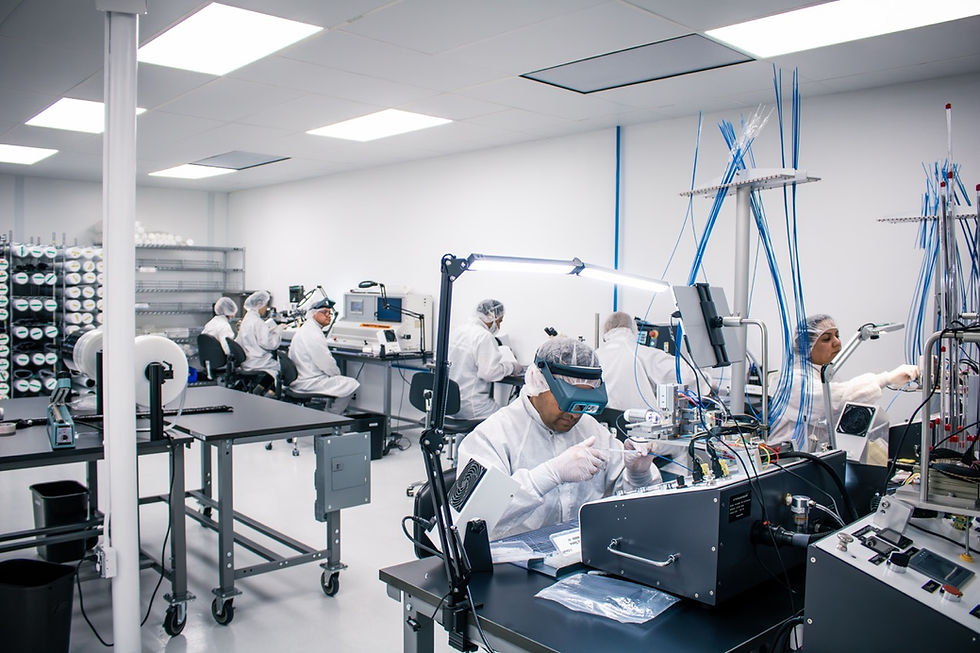
That range is the point. As Director of Manufacturing and Engineering, Vahid supports both sides of the house. On the balloon side he manages and oversees. On the catheter side he is hands on and in the process, working through materials, tooling, fixtures, and the details that decide whether a design is buildable at volume or only buildable once.
What ReCurve actually designs
Customers usually arrive with an initial design. From there ReCurve advises on materials, then owns everything downstream.
"How the catheter gets built, the whole process, every detail of it, the tooling, the fixtures. That is us. We design all of it."
That distinction matters more than it sounds. A print is not a process. Getting from a drawing to a repeatable build means someone has to decide how the shaft is made, what holds it during each operation, what the operator sees, and how you prove the result. At ReCurve, that someone is on staff.
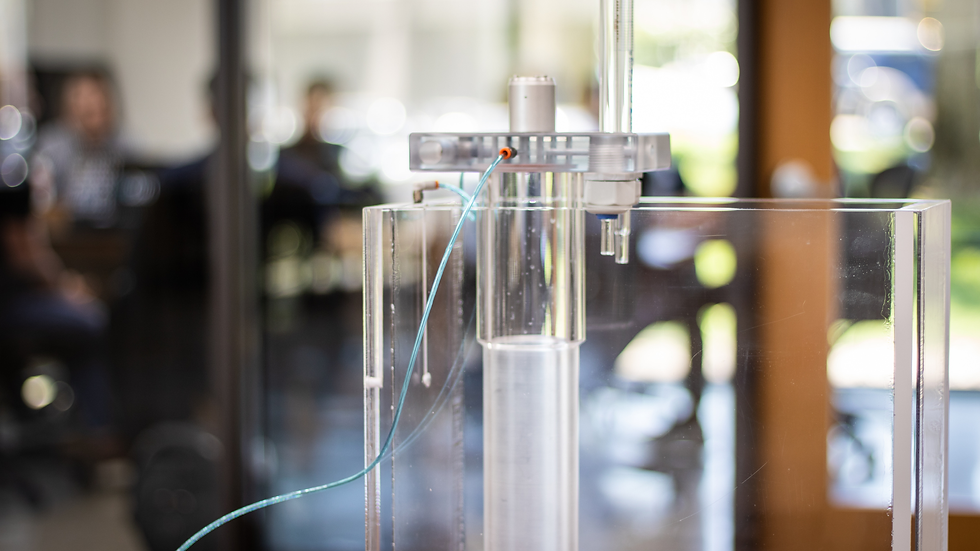
The support often extends past the build. When a customer needs data they cannot easily get, ReCurve designs the test method or the fixture to capture it. A pull force test on a specific balloon geometry, for example, needs a fixture that does not exist yet. ReCurve builds it.
From electronics to the cleanroom
Vahid did not start in medical devices. He trained as an electrical engineer and earned an MBA, then took a job in the equipment department of a company that built balloon forming machines and catheters. That was the door in.
Equipment work turned into building catheters, then blowing balloons, then R&D across a wide range of platforms: coiled shafts, braided shafts, and everything in between.
The skill set carried further than he expected.
"As an electrical engineer, that was the job. Design the hardware and the software, then design the manufacturing line, train the people, set up the process. All of that carried over here."
His first catheter program was a masterclass. The team went through three or four full design revisions with the customer before landing on the final configuration, and every material changed along the way.
"I learned how to design a fixture. I learned which materials can go into the cleanroom and which cannot. I was blowing balloons and building catheters myself, so I was splitting my time between the two, and the whole time I was thinking about how the balloon would affect the catheter process."
That dual view is exactly what he uses now. A catheter from ReCurve always has to satisfy two requirements: the customer's spec and a robust, repeatable process.
When quality and schedule collide
Every catheter design is a set of trade-offs. Pushability against flexibility. Profile against durability. Overall manufacturability, and of course cost. Vahid's rule for the two that matter most at the manufacturing level is short.
"Quality always wins. We are not going to sacrifice quality for time."
The reason that does not turn into missed schedules is transparency. Customers know where their program stands, continuously, so timelines get managed instead of discovered.
And because ReCurve is efficient, the cost structure often works in the customer's favor.
"Our costs are lower than the big companies'. What we have is knowledge and experience. Dave, Kenny, Tim, Paul, our balloon technicians. That is what is valuable."
The patent that forced a better design
One R&D program tested all of it. ReCurve was building a catheter, and the design that came in the door did not work.
The team developed their own approach, adding a unique structure inside the balloon, and it worked. Then, moving toward the next phase, they discovered another company already held a patent covering that concept.
Back to zero. New design, new approach, from scratch again.
"On both process and cost, the second was an improvement even beyond the first concept."
They solved the same problem a second time and ended up with something cheaper to make and easier to run.
An extension of the team
Ask Vahid what makes ReCurve different and he gets to the real answer quickly.
"The way we work with our customers is not client and vendor. We are on the same team."
Practically, that means far less bureaucracy than a large organization and direct access to owners, engineers, and technicians. No account manager relay. No waiting on a review cycle to get a straight answer.
"Sometimes we do not even send an email. We just call each other and fix it."
It is why parts ship on time, and often earlier than expected.
Where catheters go next
Vahid is watching electronics move into the catheter itself. He worked on a program that printed conductive ink onto balloons and it stuck with him.
"I'm waiting for the day we have to put chips in catheters. Today we use them to deliver stents, or to deliver therapy through a physical mechanism, emitters, or electronics. Someday we may use them to deliver small electronic devices inside the body. Those catheters and balloons are going to have an entirely new set of requirements."
ReCurve is not waiting for that future to arrive as a purchase order. The team is actively developing its own catheter platform concepts, drawing on deep anatomical knowledge in house, so the capability exists before a customer asks for it.
Off the clock
Vahid spends his time with his wife, his daughter, and his son. He is drawn to nature, the beach, walking in the sand, anywhere with trees. And every weekend, in Persian tradition, there is a gathering with family or friends. "That is the most important part."
On hard days, his answer is direct.
"Faith in myself, faith in my team, and no fear. I know we can find a solution. On a hard day, I know I have a team I can rely on."
Asked to finish the sentence "the best part of my job is," he did not pause.
"Working in a friendly and welcoming environment. That is what gets me up and into work every day."
ReCurve supports catheter and balloon programs from early development through commercial volumes. Reach the people who build your device directly.



Comments